The Red Sea is one of Egypt’s most fascinating natural attractions. Its clear water, colorful coral reefs, tropical fish, islands, and dramatic coastal landscapes attract travelers from around the world. However, you do not need to be a scuba diver to enjoy everything this remarkable sea has to offer.
For many visitors, scuba diving is not the right activity. Some people do not have a diving certification, while others simply prefer to stay close to the surface. Families with children may also look for easier ways to discover marine life. Others may feel uncomfortable in deep water or want a more relaxed experience during their vacation.
Fortunately, the Red Sea offers many alternatives.
Snorkeling is one of the easiest ways to see coral reefs and colorful fish. Glass-bottom boats allow passengers to observe the underwater world without entering the sea. Reef cruises combine scenic boat rides with opportunities to swim or snorkel, while island excursions add beaches and relaxation to the experience.
There are also opportunities to observe marine life, enjoy sunset cruises, explore coastal scenery, and spend time on beautiful Red Sea islands.
If you are staying in Hurghada, Best Tours Hurghada can also be a useful option when comparing different Red Sea excursions and choosing an experience that matches your interests, schedule, and comfort level.
Why Explore the Red Sea Without Scuba Diving?
Scuba diving is only one way to discover the Red Sea.
In fact, many of the most memorable marine experiences take place close to the surface. Coral reefs can be visible in relatively shallow water, and even a short snorkeling session can reveal colorful fish and fascinating underwater landscapes.
There is also something special about experiencing the sea without spending the entire day underwater.
A boat trip allows you to enjoy the journey, the coastline, the sunshine, and the views. An island excursion combines marine activities with time on the beach. A glass-bottom boat provides an opportunity to observe the underwater world while remaining completely dry.
This variety makes the Red Sea accessible to a much wider range of travelers.
You can choose an activity based on your swimming ability, confidence in the water, age, interests, and preferred pace.
1. Snorkeling – The Most Popular Alternative to Diving
Snorkeling is probably the most obvious alternative to scuba diving.
Instead of descending into deep water with an air tank, you remain near the surface and breathe through a snorkel. A mask gives you a clear view underwater, while fins help you move efficiently.
The experience can be surprisingly rewarding.
Even close to the surface, the Red Sea can reveal colorful fish, coral formations, sea grass, rocky areas, and other marine life.
Why Snorkeling Is So Popular
Snorkeling requires less equipment and preparation than scuba diving. There is no need for a diving certification, and you can usually return to the surface immediately whenever you want.
It can also be adapted to different levels of experience.
Beginners can start slowly in calm, shallow areas. More confident swimmers can explore suitable reef areas with a guide or boat crew.
However, snorkeling is still a water activity. Travelers should feel comfortable enough in the sea and follow the safety instructions provided by the operator.
Snorkeling for Beginners
If you have never snorkeled before, there is no reason to rush.
Start by becoming familiar with the mask and snorkel. Make sure the equipment fits properly and breathe calmly.
Avoid trying to swim long distances immediately. Instead, stay close to the designated area and follow the instructions of the crew.
The goal is not to cover as much distance as possible. It is to enjoy the underwater environment while remaining relaxed and safe.
2. Glass-Bottom Boats – See the Reef Without Getting Wet
A glass-bottom boat is an excellent choice for travelers who want to observe marine life without entering the water.
These boats contain transparent sections in the floor or viewing areas. Passengers can look through the glass and observe the underwater landscape below.
This option can be particularly appealing to:
- Non-swimmers
- Families with young children
- Older travelers
- People who dislike deep water
- Travelers who want a relaxing experience
- Visitors who prefer to remain dry
The experience also allows you to enjoy the scenery above the water.
You can move between viewing areas, sit on deck, take photographs, and watch the coastline while the boat travels between locations.
Visibility depends on natural conditions. Water clarity, sunlight, wind, and waves can all affect how clearly the reef can be seen.
3. Reef Cruises – Combine Sailing and Marine Life
A reef cruise provides another flexible way to explore the Red Sea.
Instead of focusing entirely on one snorkeling location, the trip may include several stops or combine reef viewing with other activities.
A typical day might begin with a boat ride from Hurghada. The boat then travels toward a suitable reef area, where passengers can choose whether to swim or snorkel.
Afterward, there may be time for lunch, relaxation, or another stop.
The advantage is that the boat journey itself becomes part of the experience.
You are not simply traveling from one activity to another. You are spending time on the Red Sea, surrounded by open water and coastal scenery.
4. Island Trips – Beaches, Blue Water and Relaxation
The Red Sea is home to several islands and coastal areas that can be visited on organized excursions.
For many travelers, an island trip offers the perfect combination of relaxation and adventure.
You can spend part of the day snorkeling and another part relaxing on the beach. If you do not want to enter the water, you can simply enjoy the landscape and atmosphere.
Giftun Island
Giftun Island is one of the best-known destinations near Hurghada.
Its sandy beaches and clear water make it popular for day trips. Many excursions combine a boat ride with snorkeling stops and time on the island.
The journey itself can be enjoyable, especially when the weather is calm.
From the boat, the color of the water changes as you move farther from the coast. Shades of blue and turquoise contrast with the dry desert landscape in the distance.
Orange Bay
Orange Bay is another popular stop around Hurghada.
Its shallow-looking turquoise waters and beach atmosphere attract visitors who want a relaxing day at sea.
Depending on the excursion, visitors may combine swimming, snorkeling, beach time, lunch, and boat travel.
Paradise Island
Paradise Island excursions can also combine a beach experience with snorkeling opportunities.
These trips are particularly suitable for travelers who do not want their entire day to revolve around underwater activities.
The beach becomes an important part of the experience.
5. Observe Marine Life Responsibly
One of the biggest attractions of the Red Sea is its marine biodiversity.
Depending on the location and natural conditions, visitors may encounter colorful reef fish, sea turtles, rays, dolphins, and other marine species.
However, wildlife encounters are never guaranteed.
Animals live freely in their natural environment, and their behavior changes from day to day. A responsible excursion should therefore describe wildlife sightings as possible encounters rather than promises.
Sea Turtles
Sea turtles are among the most exciting animals to encounter while snorkeling.
If you see one, remain calm and keep a respectful distance. Do not touch the turtle, chase it, block its path, or try to make it swim toward you.
A quiet observer has a much better chance of watching natural behavior.
Dolphins
Dolphins can also be encountered in parts of the Red Sea.
However, it is important to remember that dolphins are wild animals. A responsible excursion should prioritize their welfare rather than trying to guarantee close contact.
If dolphins appear near a boat, passengers should follow the crew’s instructions and avoid attempting to pursue the animals.
Reef Fish
Colorful reef fish are much easier to encounter in many snorkeling areas.
You may see schools of small fish moving above coral formations, individual fish hiding among rocks, or larger species passing through the reef.
The variety is part of the attraction.
You do not need to identify every species to appreciate the experience.
6. Enjoy the Red Sea Without Swimming
Not everyone wants to swim.
That does not mean you have to stay at the hotel.
A boat excursion can be enjoyable even if you remain on deck for the entire journey.
You can watch the coastline, photograph the sea, enjoy the sun, and relax while others participate in snorkeling.
Glass-bottom boats are particularly useful because they provide an underwater view without requiring you to enter the water.
Island trips can also work well. You can spend your time on the beach instead of snorkeling.
The important point is to choose an excursion that matches your comfort level rather than feeling pressured to participate in every activity.
7. Explore the Red Sea With a Family
Families often need a flexible excursion.
Parents may want to snorkel while younger children prefer to remain on the boat or beach. Older children may be excited to discover fish and coral reefs themselves.
For this reason, combination trips can be useful.
A family-friendly day might include:
- Boat ride
- Reef viewing
- Optional snorkeling
- Lunch
- Island or beach visit
- Free time
- Return to Hurghada
This structure gives everyone several ways to enjoy the day.
Before booking, families should check the exact program, age requirements, available safety equipment, shade, transfer arrangements, and expected time on the boat.
8. Enjoy a Red Sea Sunset Cruise
Marine experiences do not have to happen in the morning.
A sunset cruise offers a completely different atmosphere.
As the sun moves lower, the bright blue water gradually changes color. The surrounding mountains and coastline can become warmer and more dramatic.
A sunset cruise is particularly suitable for travelers who prefer a quiet experience rather than an active day.
It can also be a nice option for couples, photographers, and anyone who wants to experience the Red Sea at a slower pace.
The focus is not necessarily on snorkeling or marine life. Instead, it is about scenery, light, and the feeling of being on the water.
9. Explore the Coast From the Water
A boat gives you a perspective that you cannot get from the beach.
From the sea, you can see the coastline as a combination of desert, mountains, hotels, beaches, and rocky areas.
The contrast is remarkable.
The Red Sea coastline is often dry and mountainous, while the water can appear intensely blue or turquoise.
This combination of desert and sea is one of the defining landscapes of Egypt’s eastern coast.
For photographers, the view can be especially interesting during early morning or late afternoon.
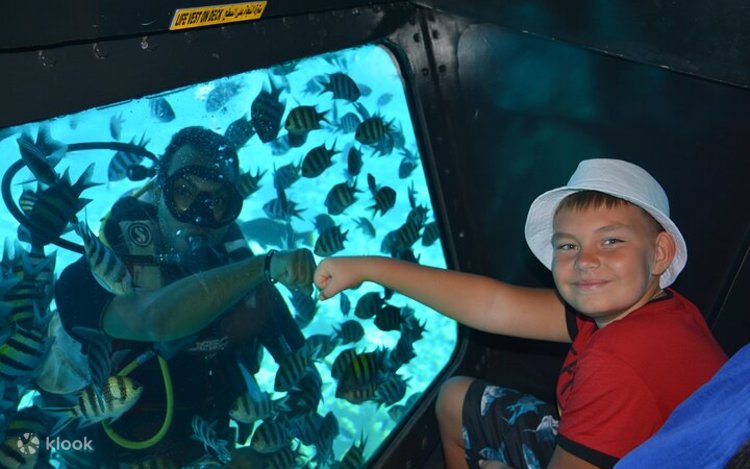
10. Try a Semi-Submarine Experience
Some Red Sea excursions offer semi-submarine or underwater-viewing experiences.
These vessels allow passengers to sit below the main waterline while remaining inside a protected cabin.
Large windows provide views of the underwater environment.
This can be an interesting alternative for people who want a closer look at marine life than a standard glass-bottom boat provides but do not want to swim.
Availability and exact formats vary, so it is important to check what the specific excursion includes before booking.
11. Combine Different Experiences in One Day
You do not have to choose only one way to explore the Red Sea.
Many excursions combine several activities.
For example, you could begin with a boat ride, spend time at a reef, snorkel for a short period, have lunch onboard, and then relax on an island.
This can be a better choice for travelers who want variety.
Instead of spending several hours doing the same activity, the day changes pace naturally.
It also allows different members of a group to choose different activities.
12. What About Non-Swimmers?
Non-swimmers have several possibilities.
A glass-bottom boat is one of the easiest choices. A traditional boat cruise can also be enjoyable without entering the water.
Island trips may work as well if there is a comfortable beach area and the itinerary does not require swimming.
Some excursions may offer supervised opportunities in shallow water, but this depends entirely on the location, conditions, equipment, and operator.
Non-swimmers should always tell the tour provider before booking.
That makes it easier to select an excursion where they can participate comfortably without being expected to swim.
13. What Should You Bring?
Preparation can make a Red Sea excursion much more comfortable.
Consider bringing:
- Swimwear
- Towel
- Reef-friendly sun protection
- Sunglasses
- Hat
- Drinking water
- Light clothing
- Waterproof bag
- Phone or camera
- Suitable footwear
- Any personal medication you normally need
If snorkeling equipment is not included, you may need to bring or rent a mask, snorkel, and fins.
A light extra layer can also be useful after sunset or during a windy boat ride.
14. Protect Yourself From the Sun
A day on the water can expose you to strong sunlight.
The reflection from the sea can make the sun feel even stronger.
Use sun protection regularly and spend some time in the shade when possible. A hat and sunglasses can also make the experience more comfortable.
Remember that swimming and snorkeling do not eliminate sun exposure. Parts of your back, shoulders, and legs can remain exposed while you are in the water.
15. What If You Get Seasick?
Some people are more sensitive to boat movement than others.
If you know that you are prone to seasickness, consider the length of the excursion and the expected sea conditions.
Following general medical advice, eating appropriately before the trip, staying hydrated, and spending time in a well-ventilated part of the boat may help some travelers.
If you regularly experience significant motion sickness, discuss suitable preventive options with a healthcare professional before traveling.
The most important thing is to plan ahead rather than discovering the problem halfway through a long cruise.
16. How to Choose the Right Red Sea Excursion
The best excursion depends on what you actually want to experience.
Before booking, consider these questions:
Do you want to enter the water?
If yes, snorkeling or a reef cruise may be suitable.
If no, consider a glass-bottom boat, semi-submarine experience, or scenic boat trip.
Are you traveling with children?
Look for an itinerary with enough breaks and activities that do not all require swimming.
Do you want relaxation?
An island trip may provide more beach time and a slower pace.
Are you interested in marine life?
Choose an excursion that includes reef areas or marine-life observation.
Do you prefer photography?
Look for a route that offers time for both underwater and coastal photography.
Do you dislike large groups?
Ask about the boat size and expected number of participants before booking.
17. Private Boat or Shared Excursion?
Another important decision is whether to choose a private or shared boat.
A shared excursion can create a social atmosphere and may include a fixed itinerary.
A private boat can provide greater flexibility, depending on the operator and package.
For families or groups of friends, privacy may be particularly valuable. Couples may also appreciate having more control over the pace.
However, the exact benefits depend on the boat, route, duration, and services included.
Always compare the actual program rather than judging an excursion only by its title.
18. How to Protect Coral Reefs
The Red Sea’s reefs are beautiful but delicate.
A few simple rules can make a major difference.
Never stand on coral. Do not touch reef organisms. Avoid collecting shells, coral pieces, or marine life.
Do not feed fish.
Feeding can alter natural behavior and affect the ecosystem.
When snorkeling, keep your movements controlled. Your fins should not repeatedly strike the reef.
If you are taking photographs, maintain enough distance to avoid accidental contact.
Responsible behavior allows future visitors to experience the same underwater landscapes.
19. What to Expect From Marine Life
It is important to approach wildlife encounters with realistic expectations.
You may see large schools of fish on one day and fewer animals on another. A turtle might appear briefly or remain hidden. Dolphins may be present in the area but not approach the boat.
This unpredictability is part of observing nature.
A responsible tour does not need to guarantee a particular animal. Instead, it provides access to suitable environments while respecting natural behavior.
The experience should be about discovering the ecosystem rather than collecting a checklist of animals.
20. Exploring the Red Sea From Hurghada
Hurghada is a convenient base for many Red Sea experiences.
Its location provides access to islands, reefs, beaches, and different types of boat excursions.
This means travelers can choose an activity according to the length of their vacation.
For a short stay, a half-day or full-day boat trip may be enough to experience the sea.
For a longer vacation, travelers can combine several activities without repeating the same experience. One day might focus on an island, another on snorkeling, and another on a relaxed coastal cruise.
When comparing excursions, Best Tours Hurghada can be considered as part of the planning process, particularly when travelers want to compare different types of Red Sea experiences from Hurghada.
Snorkeling vs. Glass-Bottom Boat vs. Island Trip
| Experience | Main attraction | Suitable for |
|---|---|---|
| Snorkeling | Direct view of marine life | Confident swimmers and beginners |
| Glass-bottom boat | Underwater views without swimming | Non-swimmers and relaxed travelers |
| Reef cruise | Reefs, boat ride and optional water activities | Travelers wanting variety |
| Island trip | Beach, sea and relaxation | Families, couples and beach lovers |
| Sunset cruise | Coastal scenery and evening light | Couples and photographers |
| Semi-submarine | Underwater viewing from a cabin | Travelers who prefer to stay dry |
There is no universal choice for everyone.
The right experience depends on how active you want to be, how comfortable you are in the water, and what you want to see.
Frequently Asked Questions
Can I enjoy the Red Sea without scuba diving?
Absolutely. Snorkeling, glass-bottom boats, reef cruises, island trips, semi-submarine experiences, and scenic boat rides all provide alternatives to scuba diving.
Is snorkeling difficult for beginners?
Many beginners can learn the basic technique relatively quickly. However, you should feel comfortable in the water, use suitable equipment, and follow the instructions of the crew or guide.
What can non-swimmers do in the Red Sea?
Non-swimmers can consider glass-bottom boats, scenic cruises, semi-submarine experiences, and island excursions that provide opportunities to stay on the boat or beach.
Can I see dolphins without diving?
Yes, dolphins can sometimes be observed from boats or while snorkeling. However, they are wild animals, so sightings and close encounters cannot be guaranteed.
Can I see sea turtles near Hurghada?
Sea turtles can be encountered in suitable Red Sea habitats, but sightings depend on location and natural conditions. They should always be observed without touching, feeding, or chasing them.
Are glass-bottom boats suitable for children?
They can be an interesting option for families because children can observe the underwater world without swimming. Parents should nevertheless check the specific boat’s safety and age requirements.
Do I need to bring snorkeling equipment?
That depends on the excursion. Some operators provide masks, snorkels, and fins, while others may charge separately or expect guests to bring their own equipment.
Is a Red Sea boat trip suitable for someone afraid of deep water?
It can be, especially if you choose a glass-bottom boat or scenic cruise where entering the water is optional. Always explain your concerns to the provider before booking.
Can I take underwater photographs while snorkeling?
Yes, with suitable waterproof equipment. Remember that getting closer to marine life is not worth disturbing an animal or touching coral.
What is the best way to protect the Red Sea?
Do not touch coral, feed fish, chase animals, collect marine life, or leave waste behind. Following local guidance and respecting wildlife are simple ways to reduce your impact.
Conclusion
Exploring the Red Sea does not require scuba certification or a passion for deep-water diving.
The region offers a remarkable range of alternatives. Snorkeling allows travelers to experience coral reefs from the surface. Glass-bottom boats provide underwater views while keeping passengers dry. Reef cruises combine marine exploration with relaxing time on the water, while island trips add beaches and scenic landscapes.
For those interested in wildlife, the Red Sea can offer unforgettable encounters with fish, turtles, dolphins, rays, and other marine species. However, nature always remains unpredictable, so sightings should be appreciated as possibilities rather than guarantees.
The most enjoyable excursion is usually the one that matches your own comfort level. You may want to spend hours snorkeling, or you may prefer to sit on deck and watch the coastline. You might choose an island beach, a glass-bottom boat, or a quiet sunset cruise.
There is no need to experience the Red Sea in only one way.
From Hurghada, travelers can combine different activities to create a Red Sea experience that fits their interests, whether the goal is marine life, photography, relaxation, family time, or simply enjoying the extraordinary contrast between Egypt’s desert and its brilliant blue sea.
The Red Sea is much more than a destination for divers. It is a place to explore, observe, relax, and appreciate one of Egypt’s most remarkable natural environments.